Responsive beginnings3 min read
Talking to a baby is not a performance of constant narration. A pause can make room for a look, movement or sound that you can notice and respond to. The aim is a responsive shared moment, without treating early sounds as a test or promising that a particular script accelerates language.
Read the guide ↗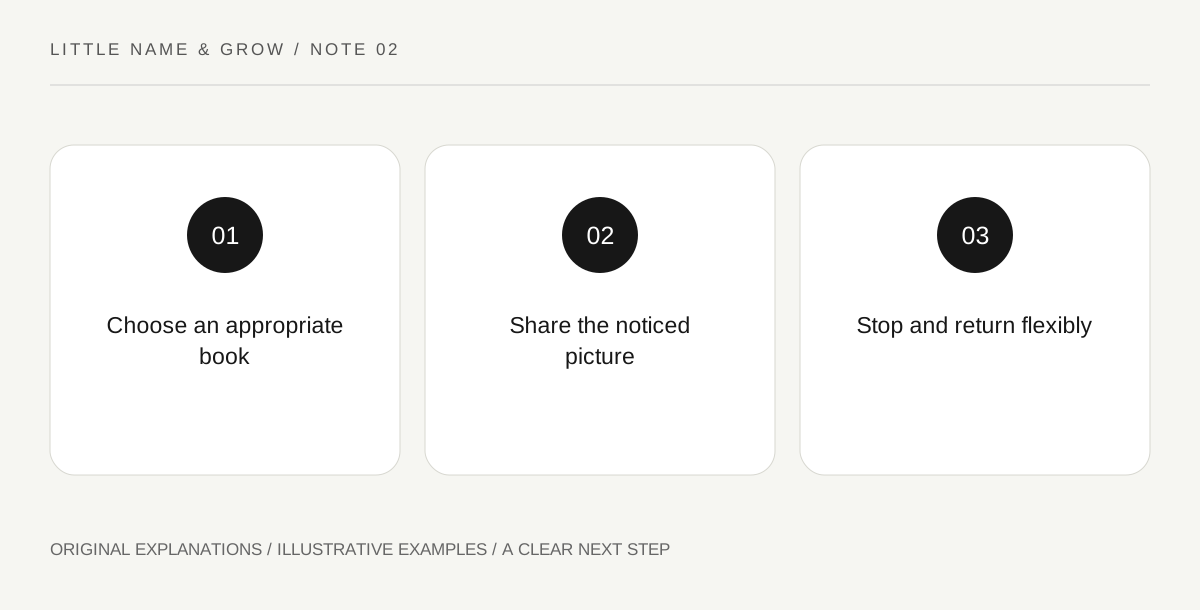
Responsive beginnings3 min read
A baby may look at one picture, touch a page or turn away before a story ends. Shared reading can still be worthwhile. The practical goal is a comfortable interaction with a suitable book and an attentive adult, rather than completing a title, teaching letters early or collecting a daily reading score.
Read the guide ↗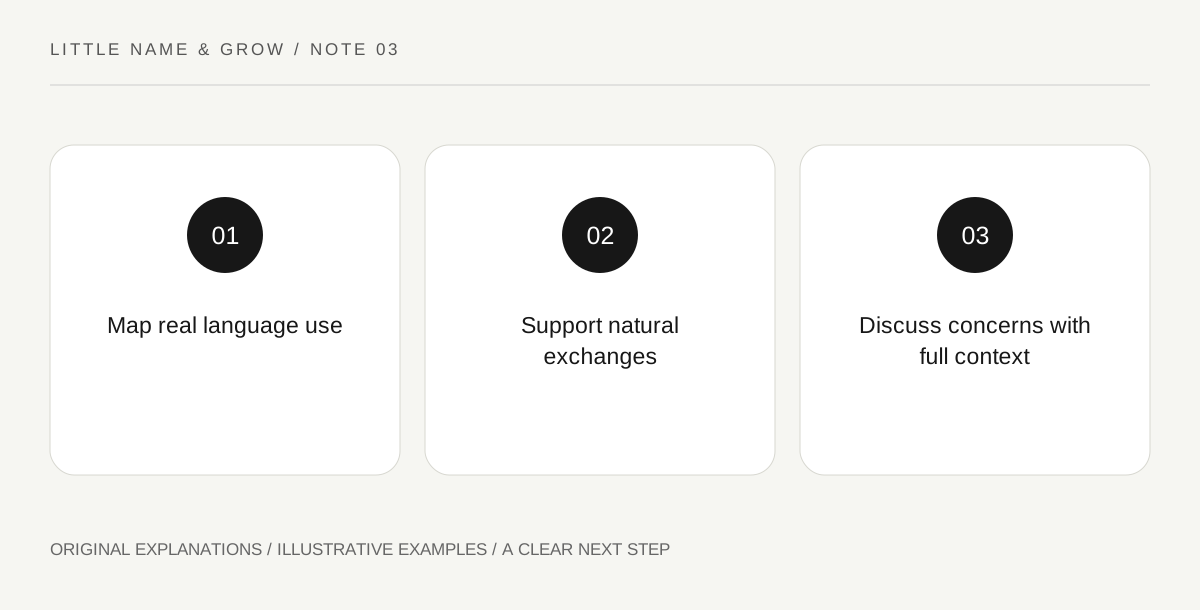
Responsive beginnings3 min read
A multilingual home does not need to sound like a language course. Familiar adults can speak naturally while providing ordinary responsive care. A useful family discussion concerns who communicates with the baby and how, without treating a heritage language as a problem or using multilingualism to dismiss a genuine developmental concern.
Read the guide ↗
Responsive beginnings3 min read
A busy interaction can include several voices, music, lights and repeated attempts to entertain. If the baby becomes fussier, adding another toy may not help. A practical pause simplifies the setting and checks ordinary care needs, without diagnosing overstimulation or assuming every cry has the same explanation.
Read the guide ↗
Responsive beginnings3 min read
Tummy play is an awake, supervised activity with a different purpose from sleep. A useful plan makes the adult's attention and the baby's comfort explicit. It does not require a baby to tolerate a fixed challenge, and babies born prematurely or with relevant health needs may need individualized guidance.
Read the guide ↗
Responsive beginnings3 min read
A baby can explore movement while an adult offers an appropriate object and watches. The useful role is creating a safe opportunity, not making the hands complete a milestone. A simple setup also makes it easier to notice what the baby does naturally and to describe concerns accurately to the care team.
Read the guide ↗
Responsive beginnings3 min read
A familiar game can become an exchange when the adult pauses and notices the baby's response. It does not need a dramatic laugh or a new skill every time. A useful approach keeps the game safe, simple and responsive, while leaving developmental assessment separate from whether a baby enjoys one activity today.
Read the guide ↗
Development conversations3 min read
Parents can notice development every day, while a standardized screening or diagnostic assessment has a different role. Understanding that distinction makes a checklist more useful and less like a scorecard. A concern deserves discussion even when an app looks reassuring, and one unchecked item does not establish a condition.
Read the guide ↗
Development conversations3 min read
After a premature birth, one age number may not answer every question. Chronological age and corrected age can serve different purposes in care and development discussions. A useful family note preserves both and asks which applies, without changing appointment, feeding or medical instructions on the basis of a homemade calculation.
Read the guide ↗
Development conversations3 min read
A hearing screen is designed to identify babies who need further assessment, not to provide every answer about hearing. A useful response records the actual result and follows the recommended next step promptly. A baby reacting to a loud sound at home does not replace that follow-up or settle the meaning of the screen.
Read the guide ↗
Development conversations3 min read
Newborn screening can identify babies who need timely further assessment before a problem is obvious. A useful family understanding covers the result route and what to do if contacted. It does not treat a screening message as a diagnosis or assume that a comfortable-looking baby makes follow-up unnecessary.
Read the guide ↗
First-year decisions3 min read
Persistent crying can overwhelm a tired caregiver even when they care deeply about the baby. The next action should protect both people and make help accessible. A safe pause is different from abandoning care, and it does not require proving that every possible soothing method has been tried first.
Read the guide ↗
Responsive beginnings3 min read
A baby's response to a new face can vary with age, tiredness and the setting. A useful introduction allows the trusted caregiver to remain involved and the baby to respond at their own pace. It does not label a quiet or upset baby unfriendly or make physical contact a requirement for pleasing adults.
Read the guide ↗
First-year decisions3 min read
A care transition can be hard even when the incoming caregiver is trusted and prepared. A useful goodbye is clear, appropriate to the baby's stage and connected to a reliable handover. The aim is predictability and safe care, not eliminating every protest or using a single reaction to judge the relationship.
Read the guide ↗
First-year decisions3 min read
Starting foods is a developmental and care decision, not a race to the earliest photograph. CDC describes introduction at about six months alongside readiness signs. A useful conversation considers the baby's actual abilities and health needs, then clarifies safe feeding guidance rather than letting age, a product label or a relative's timetable decide alone.
Read the guide ↗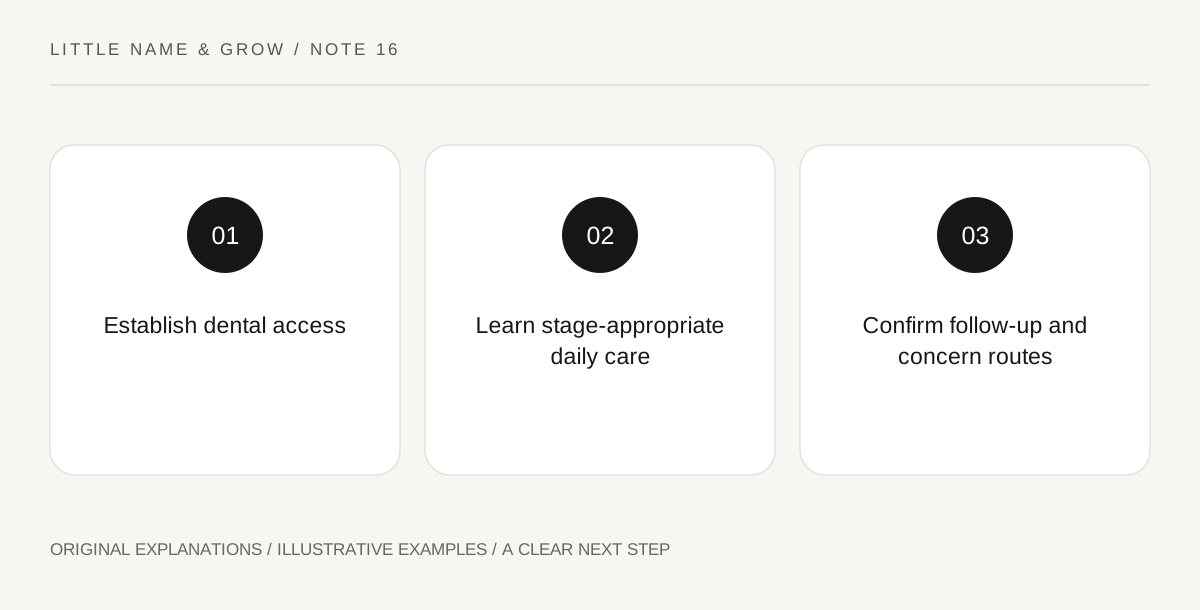
First-year decisions3 min read
A first tooth brings a new care question as well as a family photograph. The ADA recommends a dental visit after the first tooth appears and no later than the first birthday. A useful preparation focuses on daily care, access and questions, without assuming that the absence of pain means no dental guidance is needed.
Read the guide ↗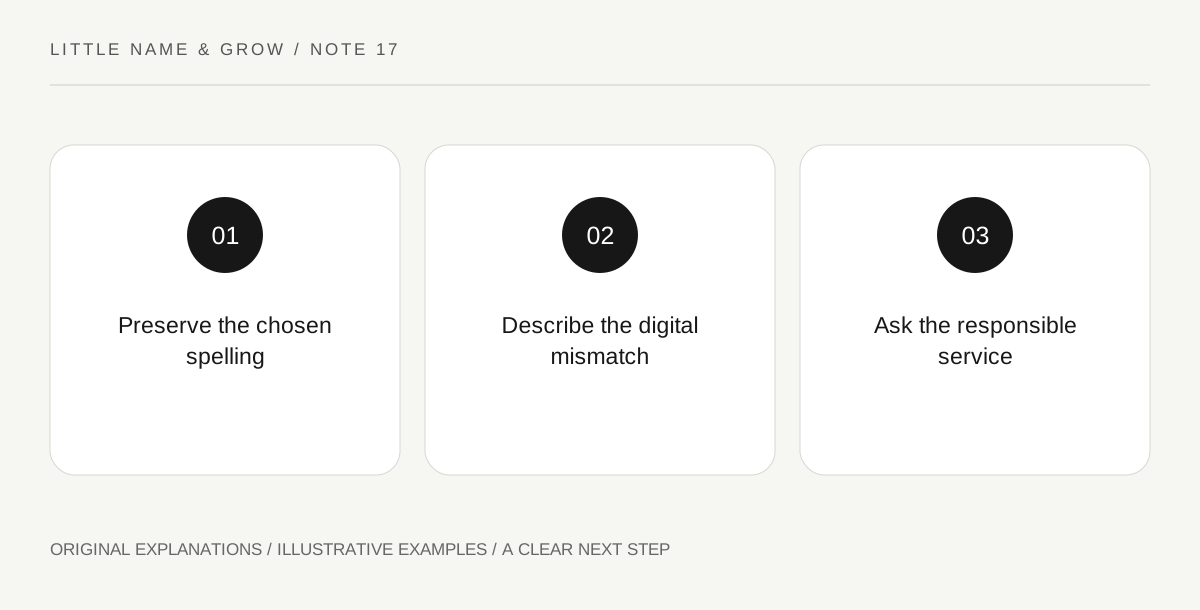
Name research3 min read
A name with an accent can look identical in two files while being stored as different character sequences. That is a text-handling issue, not evidence that one family's spelling is wrong. Understanding the distinction helps you report a digital problem accurately without changing a chosen name or assuming every official system accepts the same characters.
Read the guide ↗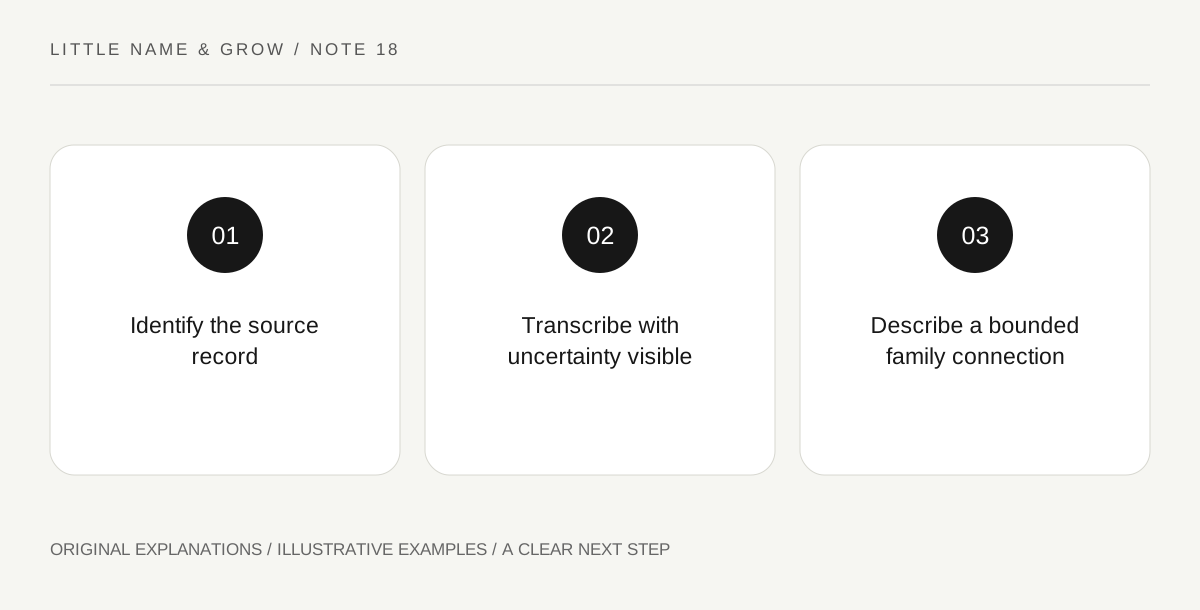
Name research3 min read
A family document can show how a name was recorded in a particular place and time. It may not establish the person's preferred form, the spelling at birth or a linguistic meaning. A careful research note keeps image, transcription and interpretation separate before using an ancestral name as inspiration.
Read the guide ↗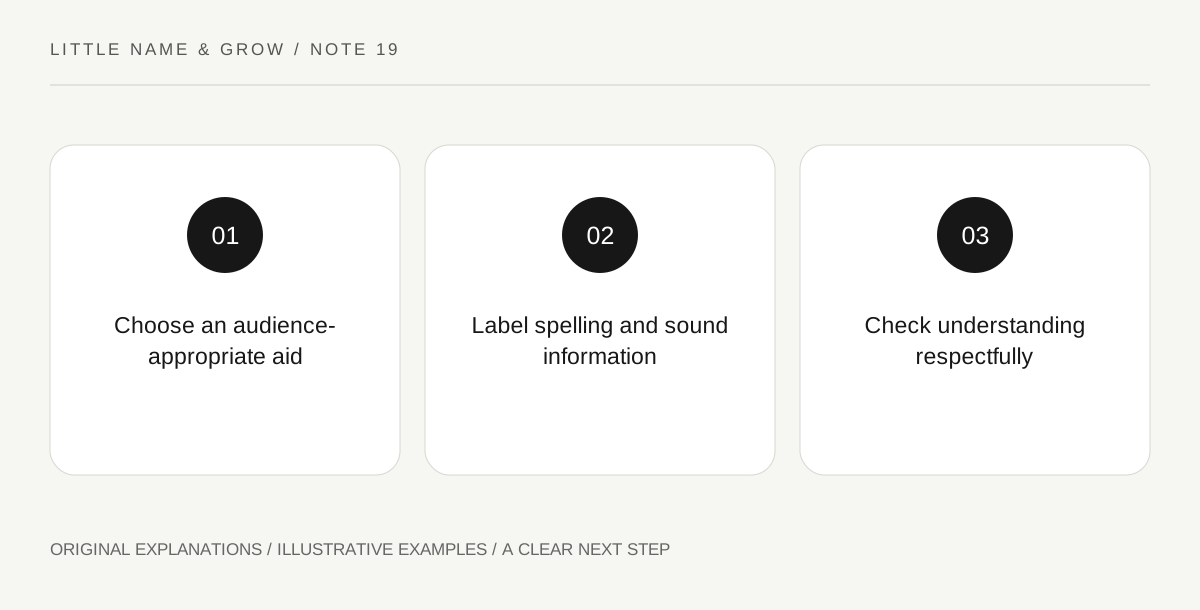
Name research3 min read
A pronunciation note can help a willing caregiver learn a child's name, but its notation needs to be understood. Ordinary respelling, a sound recording and International Phonetic Alphabet symbols do different jobs. A useful note labels its method and scope rather than claiming that one improvised spelling represents every accent.
Read the guide ↗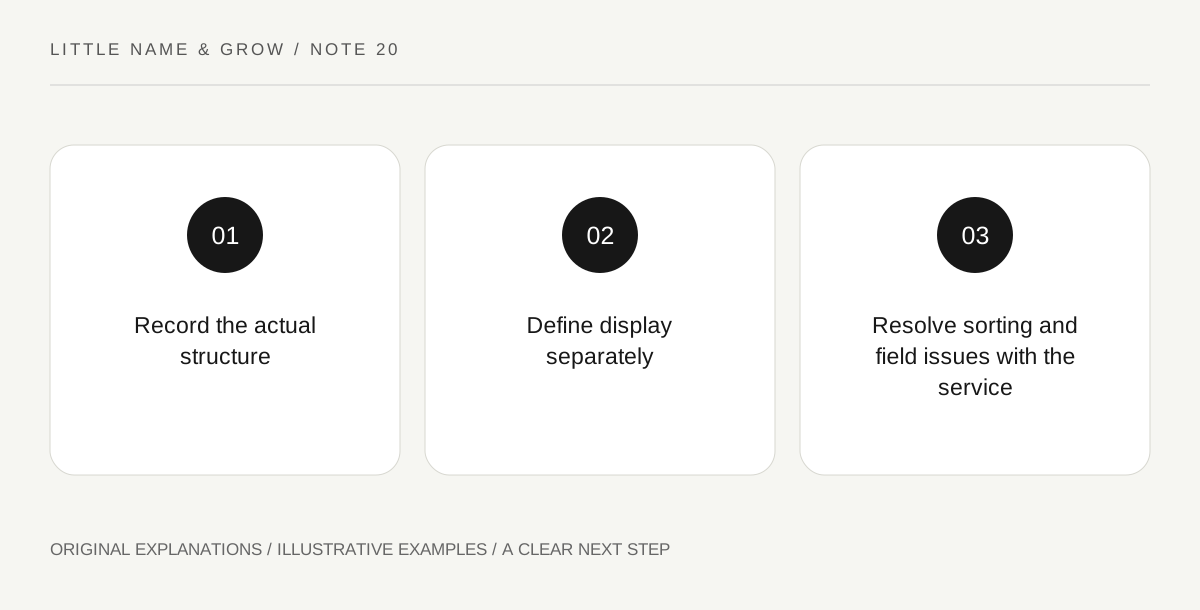
Name research3 min read
A family name record may need to support a full written form, an everyday display and an alphabetical list. Those purposes are related but not identical. Separating them avoids assuming that the first word is always a given name or that a software-generated abbreviation describes the family's intended use.
Read the guide ↗