Discuss solid-food readiness through development and care needs, not calendar excitement
Starting foods is a developmental and care decision, not a race to the earliest photograph. CDC describes introduction at about six months alongside readiness signs. A useful conversation considers the baby's actual abilities and health needs, then clarifies safe feeding guidance rather than letting age, a product label or a relative's timetable decide alone.
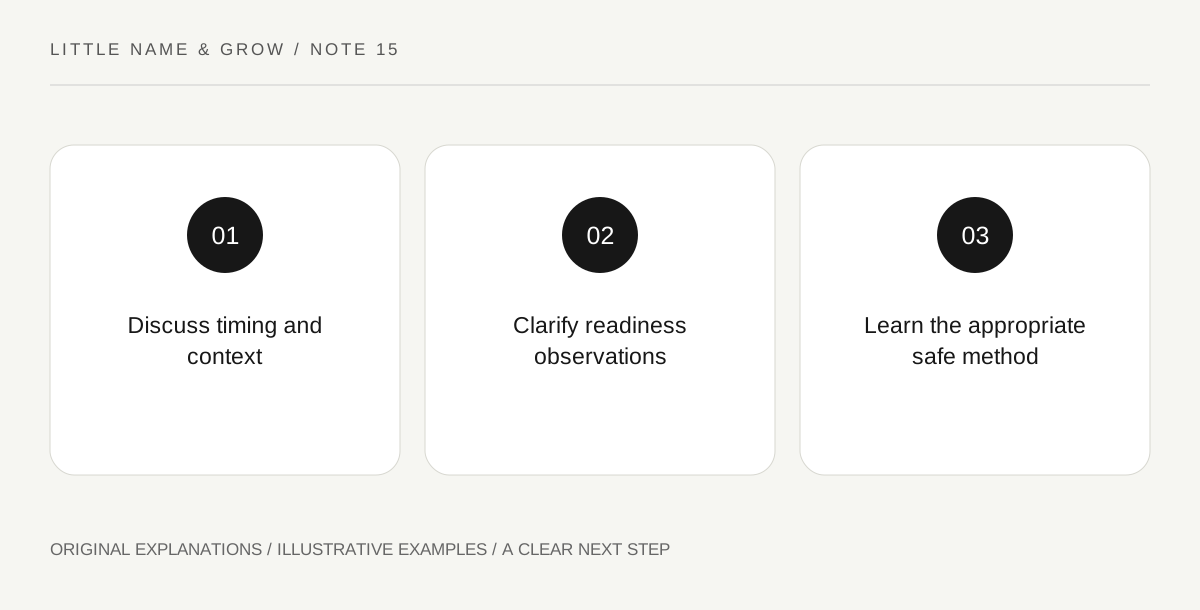
Original explanatory diagram. Read the full method and limitations below.
Use age as context rather than the only answer
CDC and AAP guidance places introduction of foods other than breast milk or infant formula at about six months, with developmental readiness considered. Ask the baby's clinician how that applies to prematurity, medical needs or other circumstances. Do not use a social-media trend or a food package's age label as an individualized decision. The calendar helps frame a question but does not show posture, swallowing or other relevant abilities. Keep the existing milk-feeding plan intact unless the care team advises a change. This article does not provide a personal feeding schedule or decide readiness remotely.
Describe the abilities you actually observe
Use CDC's readiness information and ask the clinician to explain any uncertain point. Describe head and neck control, supported sitting and the relevant feeding behaviors in ordinary terms rather than staging a test. A baby reaching for an adult's food is not the whole assessment. Do not force a taste to find out whether the baby is ready or interpret one reaction as proof. If there are swallowing, growth or other concerns, seek appropriate professional advice. A useful note identifies the question and context, without comparing with a cousin or treating one visible skill as permission for every texture.
Ask for the safe feeding method separately
Once the appropriate time is discussed, ask about suitable foods, textures, positioning, supervision and choking prevention using current official guidance and the baby's care plan. Allergy-related questions may need individualized advice. Do not improvise a high-risk food, use an unsuitable seat or leave the baby eating unattended. A general recipe site cannot replace the relevant instructions. Keep the adult's ability to supervise in the plan and use equipment only as intended. The readiness conversation should lead to clear practical guidance, not a shopping list that assumes every feeding accessory is necessary or every baby follows one method.
Separate readiness from a comparison of feeding styles. Families may encounter strong claims about spoons, self-feeding or particular products, but the baby's safety and individual needs come first. Ask the care team which method and textures are appropriate and how to recognize a concern. A purchasing decision can wait until that guidance is understood. The first-food milestone does not require an elaborate set or a public demonstration.
Keep response and follow-up open
Ask what difficulties or symptoms should prompt contact and how feeding changes will be reviewed. A messy or hesitant first experience is not a reason to push food or compare performance. Follow the baby's cues and the professional plan. If the arrangement does not work, seek advice rather than rapidly changing several variables or replacing milk feeds on guesswork. The useful outcome is an informed start with safe methods and a clear support route. It is not guaranteed acceptance of foods, accelerated development or proof that an early start makes a baby more advanced.
An illustrative readiness question
A family is excited about an approaching age milestone but is unsure about the baby's sitting and feeding abilities. They describe those observations to the clinician and ask about safe introduction, textures and supervision. They do not use a staged first-bite photograph or a package label as the final readiness decision.
Practical checks
Optional checkboxes save only in this browser.
Questions that come up
Does interest in my plate prove readiness?
Not by itself. Consider the full developmental guidance and the baby's individual care needs.
Does a product's age label replace clinical advice?
No. It does not assess your baby or override a specific care plan.
References and scope
These sources support the factual background. Examples and exercises are original illustrative teaching material. References do not imply endorsement.
- CDC: Introducing Solid Foods — About-six-month introduction, developmental readiness and appropriate care conversations.