Share a book with a baby without needing to finish it
A baby may look at one picture, touch a page or turn away before a story ends. Shared reading can still be worthwhile. The practical goal is a comfortable interaction with a suitable book and an attentive adult, rather than completing a title, teaching letters early or collecting a daily reading score.
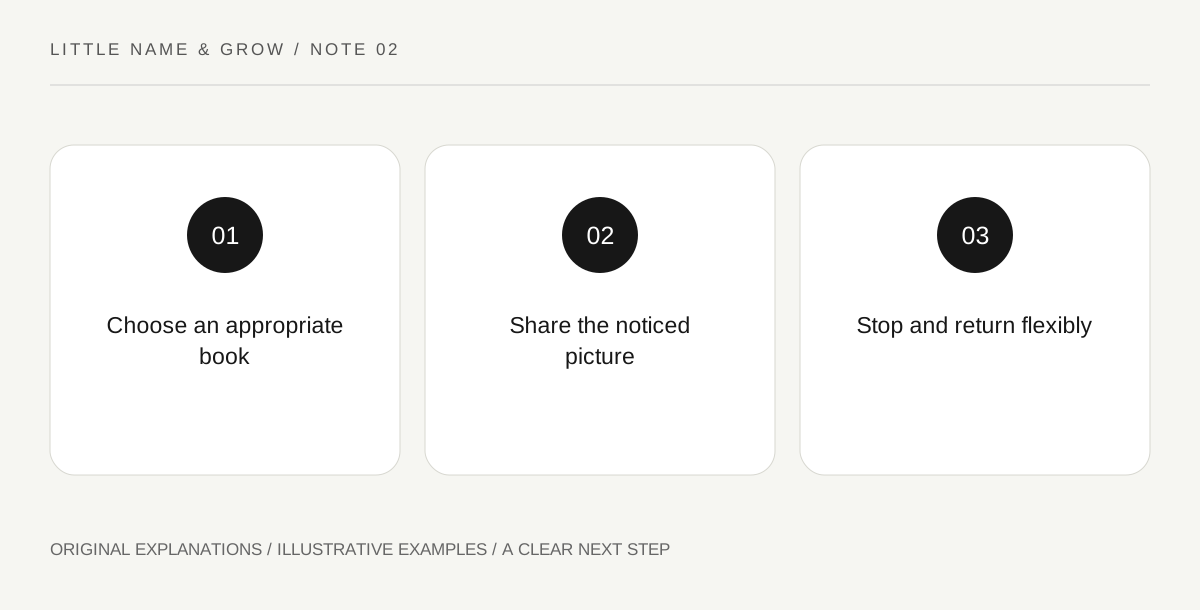
Original explanatory diagram. Read the full method and limitations below.
Choose a suitable physical book and setting
Use an age-appropriate book in good condition, with no loose pieces or other hazards, and supervise handling. AAP encourages shared reading from infancy. A sturdy format can be easier to manage than delicate paper, but the actual product and baby's stage matter. Choose a position that supports safe care and lets you respond to the baby. Reading does not replace sleep or feeding needs, and books should not be left in an infant sleep space. A familiar book is fine; novelty is not a requirement for a meaningful shared moment.
Follow a picture rather than the entire plot
Talk about the part the baby notices. You can name an object, describe a simple action or repeat a familiar phrase without reading every printed word. A baby does not need to understand the story's sequence for your voice and attention to matter. Avoid turning pages quickly to reach an adult-defined endpoint. If the baby touches or mouths a suitable book, supervise according to its condition and intended use. The interaction is not a test of recognition. Repeatedly asking where is the dog before the baby is interested can make a pleasant moment into a performance demand.
Keep the book choice connected to handling. If the baby is likely to mouth a suitable book, inspect it for wear and follow cleaning directions rather than assuming a cloth or board format remains safe indefinitely. Remove a damaged item. Reading access also includes the adult: clear print or a familiar story may make sharing easier for a tired caregiver. None of those practical choices requires a premium educational label or a promise of exceptional literacy.
Use repetition and family language naturally
A familiar phrase or song-like line can become part of the shared experience. Use languages you know comfortably and invite other trusted caregivers to share books in their own natural way. A different pronunciation or storytelling style need not be treated as an error to correct in front of the baby. Keep factual language concerns separate from personal preference. Do not promise that a specific title, voice or reading schedule guarantees earlier speech. The book is a tool for interaction, not a product that can certify an outcome. You can enjoy the same page several times without expanding the collection.
Stop when the interaction no longer fits
If the baby becomes tired, uncomfortable or uninterested, close the book and respond to the immediate need. A short session is not a failed session. Keep a small selection accessible to the adult so starting again is easy, while storing books safely outside the sleep arrangement. If vision, hearing, movement or developmental needs affect access, ask appropriate professionals about adaptations. The useful review is whether the format and setting worked, not whether every page was completed. Shared reading can remain an ordinary welcome activity rather than another obligation that parents must perform perfectly.
An illustrative one-page reading
A caregiver opens a sturdy baby book and the baby watches one bright image. They describe it briefly and repeat a familiar phrase. When the baby turns away and needs care, they stop. The unfinished book remains a useful shared experience rather than evidence that the baby cannot concentrate.
Practical checks
Optional checkboxes save only in this browser.
Questions that come up
Must I read every word?
No. Naming pictures and talking naturally can be part of sharing a book. Follow the baby's interest.
Does stopping early mean the activity failed?
No. Responding to tiredness or discomfort is more useful than completing an adult-defined reading target.
References and scope
These sources support the factual background. Examples and exercises are original illustrative teaching material. References do not imply endorsement.
- AAP: How to Share Books with Your Baby — Shared reading from infancy and following the baby's interest.