Keep newborn blood-spot screening separate from a final diagnosis
Newborn screening can identify babies who need timely further assessment before a problem is obvious. A useful family understanding covers the result route and what to do if contacted. It does not treat a screening message as a diagnosis or assume that a comfortable-looking baby makes follow-up unnecessary.
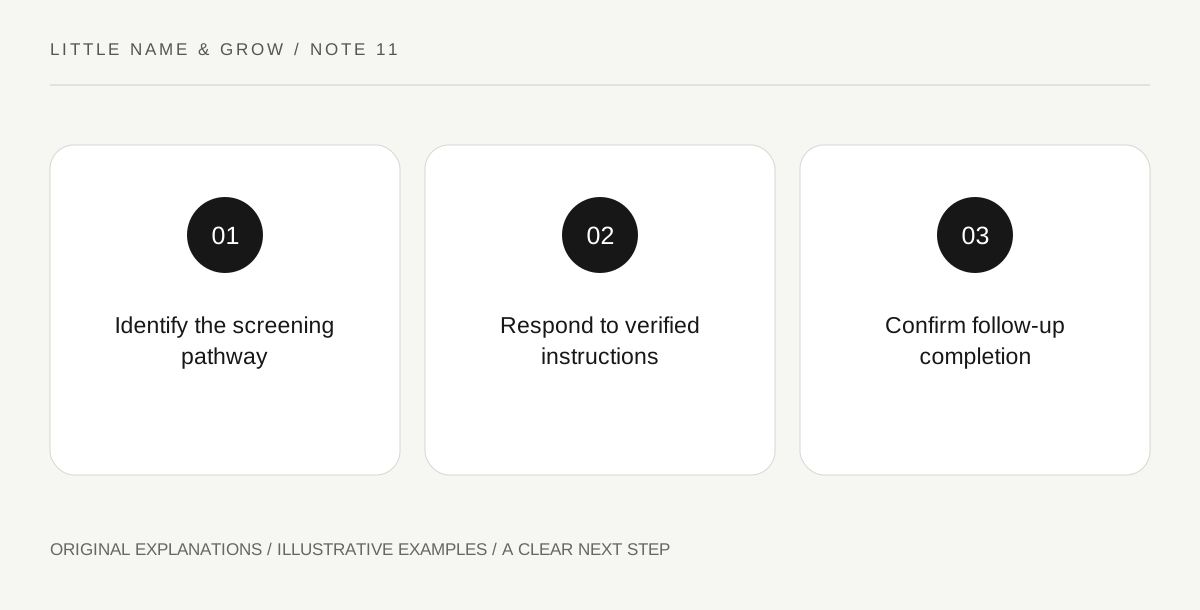
Original explanatory diagram. Read the full method and limitations below.
Identify the screening program and test
Ask which newborn screening was performed and how it differs from hearing or other checks. The California Department of Public Health explains its blood-spot screening program and what parents can expect; other locations have their own programs and instructions. Keep the baby's identifying details and collection information accurate through the service's process. Do not assume one screening covers every possible condition or that the same panel and rules apply everywhere. The purpose of this guide is understanding the pathway, not interpreting laboratory values or deciding which test an individual baby needs.
Know where results and contact will go
Ask the maternity or pediatric team how results are communicated, who receives them and how your current contact details are maintained. Keep the relevant official number available through an independently confirmed source. If contacted, verify the service and respond through the appropriate route without posting private results publicly for interpretation. A message about further testing may need prompt action even when the baby seems well. Do not wait for symptoms to confirm that a screening request matters. Equally, do not turn the message into a diagnosis before the qualified team explains the result and next step.
Follow the actual instruction rather than an online comparison
Ask what appointment, repeat sample or assessment is required and what preparation applies. The answer depends on the result and clinical situation. Do not change feeding, medicines or care based on another family's story or a general condition description. If a direction is unclear, ask the responsible service to explain it in a language and format you understand. Raise access barriers immediately so the follow-up is not lost. A screening pathway should lead to an appropriate professional answer; a search engine cannot determine whether a particular result is a false alarm or a confirmed condition.
Distinguish the sample collection from the result and from any follow-up completion. A note that a sample was taken does not tell you whether a later request has been resolved. Ask the program or care team how that sequence is documented. Keep the current status factual: collected, awaiting information or follow-up arranged. Avoid adding a reassuring interpretation simply because an administrative stage is complete.
Keep records and broader care connected
Save the written information and confirm that the baby's relevant care team knows the next step. Ask when and how completion will be documented. Keep any questions about sample storage or privacy separate from the immediate clinical follow-up, using the program's current official process. A parent can ask about both without assuming they are the same decision. Continue ordinary care and seek help for concerning symptoms through appropriate channels. The useful outcome is a clear, completed follow-up route, with screening and diagnosis distinguished. It is not a guarantee that every health condition has been excluded.
An illustrative follow-up call
A California family receives an official request for additional newborn-screening assessment. They confirm the service through a known route, ask about timing and preparation, and arrange the next step. They do not diagnose from the message or postpone because the baby appears comfortable. Privacy questions are directed to the program separately.
Practical checks
Optional checkboxes save only in this browser.
Questions that come up
Does a screening concern equal a diagnosis?
No. Screening identifies a need for further assessment. The responsible clinical team should explain the meaning and next step.
Should a well-looking baby skip requested follow-up?
No. Follow the actual screening instructions promptly rather than waiting for symptoms.
References and scope
These sources support the factual background. Examples and exercises are original illustrative teaching material. References do not imply endorsement.
- CDPH: Newborn Screening, What to Expect — California newborn blood-spot screening and follow-up information.